
Failure Modes
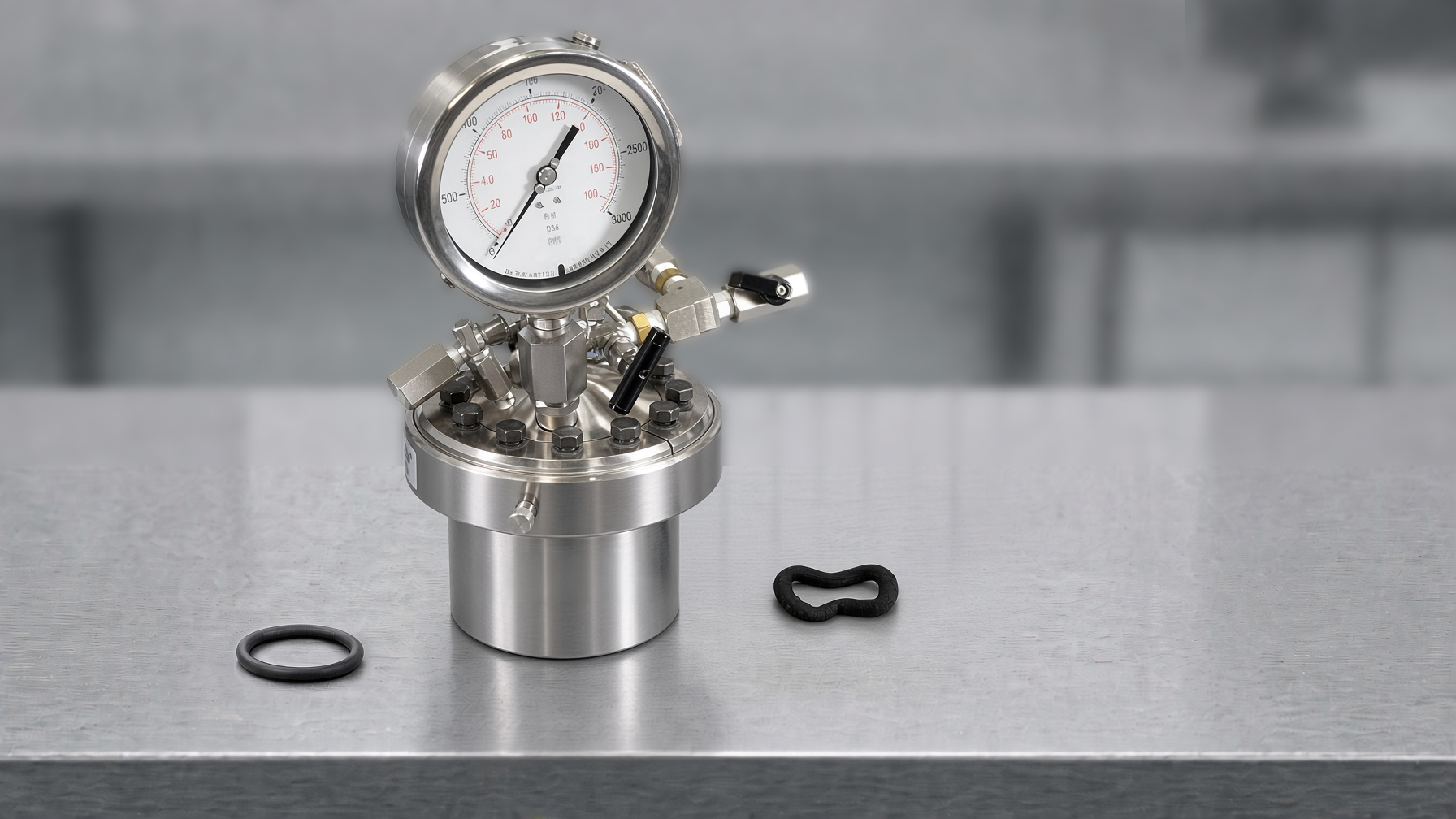
Rapid Gas Decompression (RGD) Testing for Elastomer O-Rings
What ISO 23936-2 / NORSOK M-710 rapid gas decompression means for O-Rings: high-pressure gas soak, fast depressurization, 0-5 blister ratings, cross-section traps, and how seal engineers pick RGD-resistant compounds.
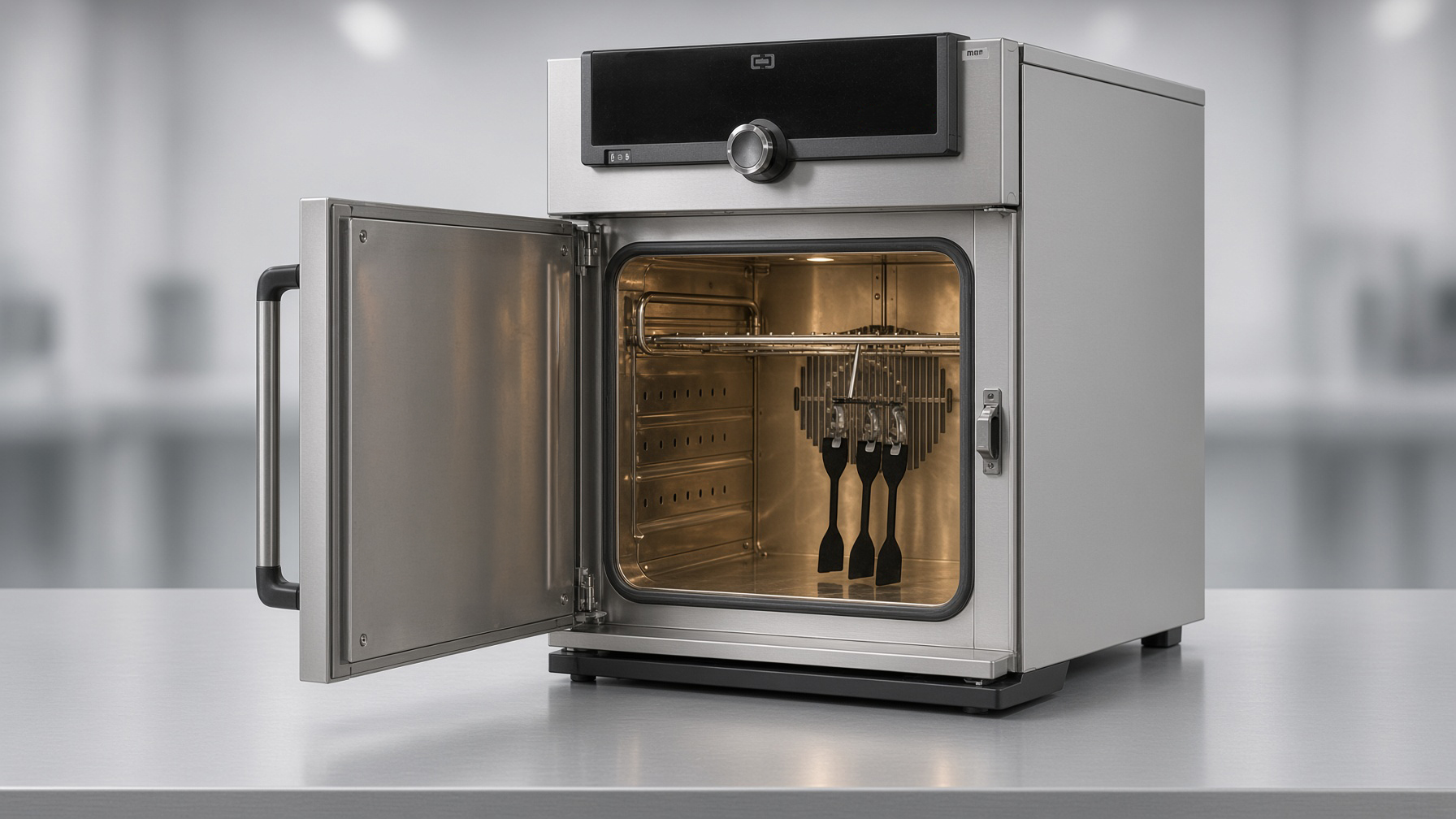
Heat Aging Testing for Elastomers: Oven Effects on Hardness, Tensile, and Elongation
What ASTM D573 / ISO 188 heat aging means for O-Rings: air-oven method, hardness rise and tensile/elongation retention, D2000 screen temperatures, family heat rankings, and how seal engineers read the datasheet beside compression set and TR-10.
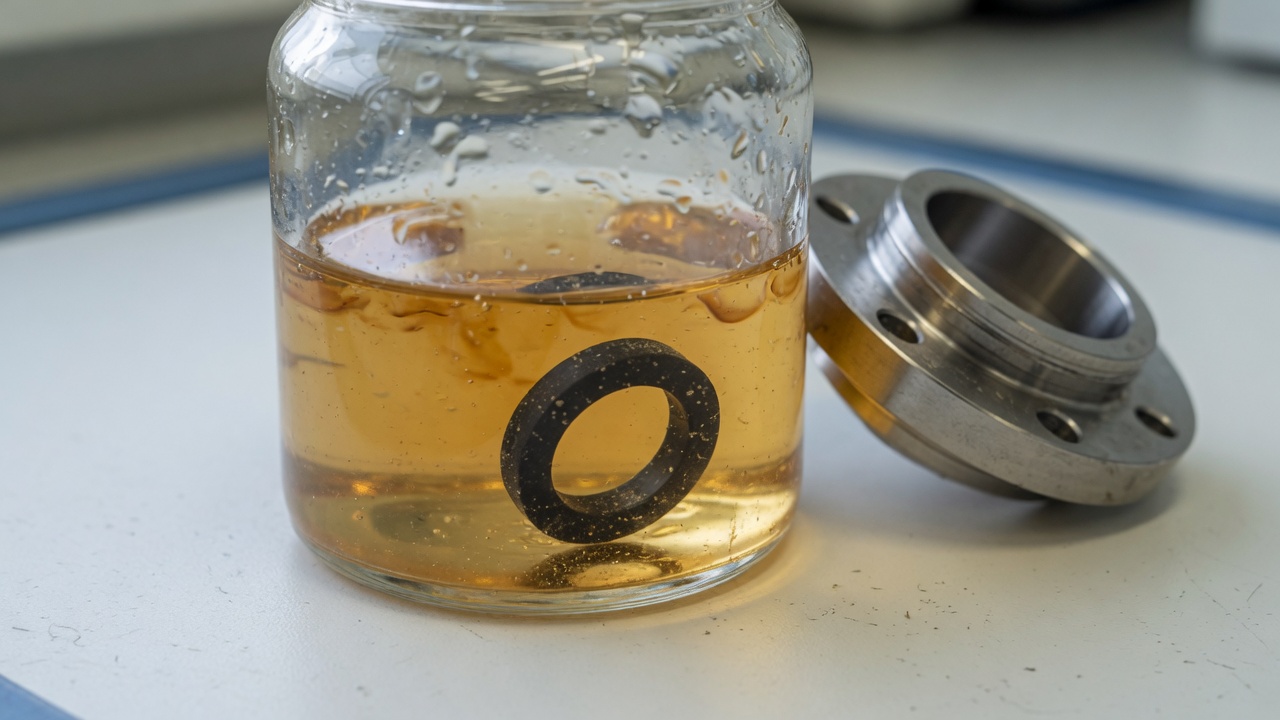
Volume Swell and Fluid Immersion Testing: How Fluids Change O-Ring Size
What ASTM D471 / ISO 1817 volume swell means for O-Rings: fluid immersion method, ΔV% and hardness change, static vs dynamic limits, IRM oil rankings by elastomer family, and how seal engineers read the datasheet.
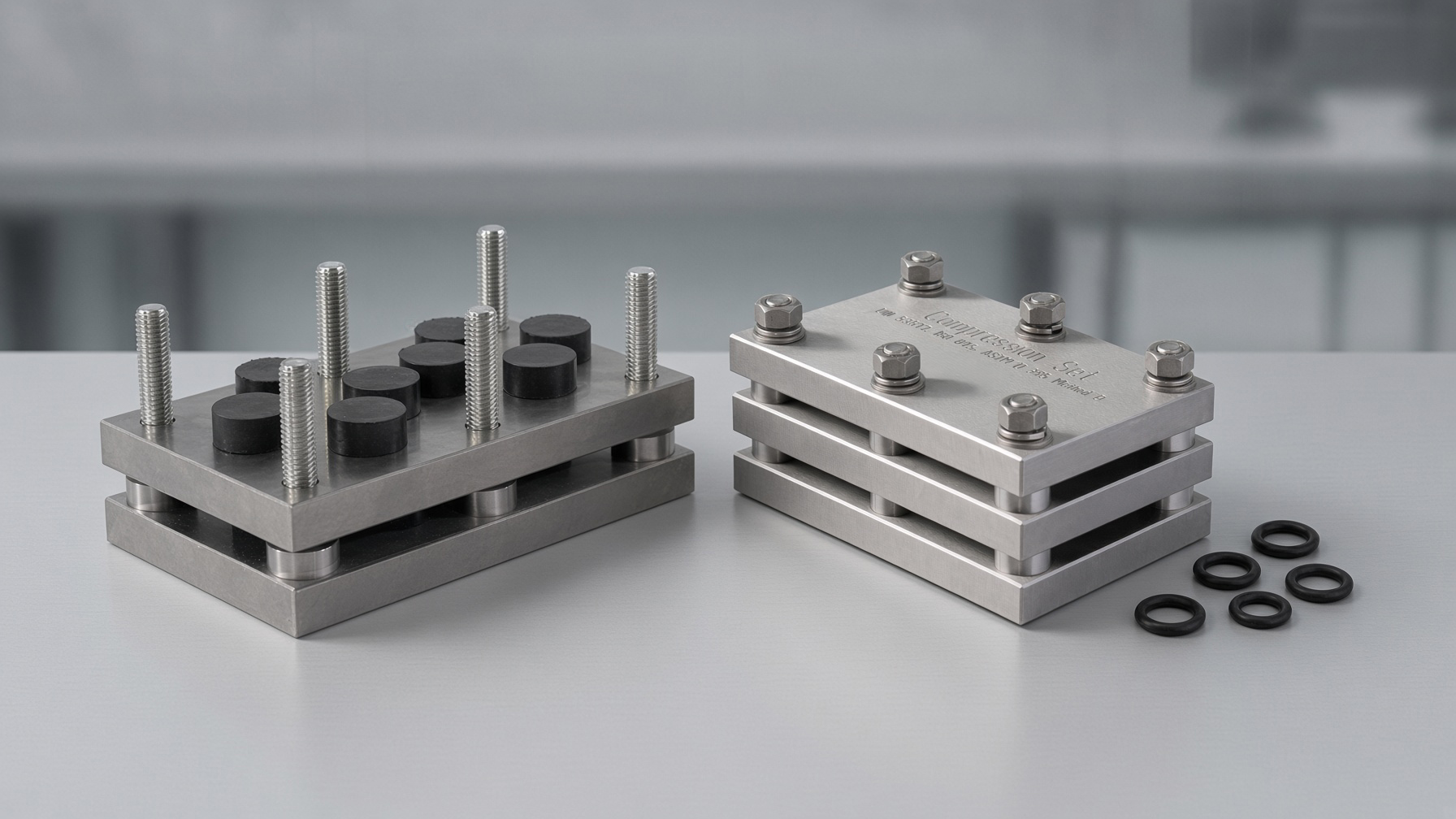
Compression Set Elastomer Testing: Why Flattened O-Rings Stop Sealing
What compression set means for O-Rings: ASTM D395 / D1414 / ISO 815 methods, 0% vs 100% set, gland take-a-set behavior, polymer test temperatures, and how seal engineers use the number for long-term squeeze.
O-Ring Applications, Failure Modes & Troubleshooting
The problem-solver chapter: O-Rings by industry, special uses, a failure-mode gallery with pictures and fixes, root-cause troubleshooting, rules of thumb, installation, and storage.
O-Ring Failure Mode Gallery: Picture, Cause, Fix
Every common O-Ring failure mode with a diagram, the root cause, and the fix: extrusion, compression set, swell, heat cracking, explosive decompression, abrasion, spiral failure, installation damage, and ozone cracking.