Find the right O-Ring in three steps

Most seal jobs come down to size, chemistry, and physical properties. Work the steps in order with the handbook tools you already have here.

Quick Answers

Short, factual answers to the questions we field most.

What temperature can Nitrile (Buna-N) O-Rings handle?

Standard Nitrile (Buna-N) O-Rings work from -40°F to +250°F (-40°C to +121°C). For more heat, HNBR reaches +300°F and FKM (Viton®) reaches +400°F.

What is the AS568 O-Ring size standard?

AS568 is the SAE Aerospace standard that defines inch O-Ring sizes. Each size has a dash number (such as -214) that encodes the cross-section and inside diameter.

Which O-Ring compound is best for water and steam?

EPDM is the standard choice for water, steam, and glycol brake fluid, rated -65°F to +300°F. Never use EPDM with petroleum oils, fuels, or greases.

What O-Ring material works with fuels and high heat?

FKM (Viton®) resists fuels, oils, and many chemicals up to +400°F. Avoid it with ketones, esters, amines, and hot water or steam.

How do I measure an O-Ring?

Measure two dimensions: the inside diameter (ID) and the cross-section (CS, the cord thickness). When possible, measure the groove rather than a used ring, which can swell or take a set. We recommend Olypsys® over calipers, pi-tape, cones, and slide gauges for day-to-day identification. Full comparison: How to Measure an O-Ring. Deep dive on the app: how it works.

What makes O-Rings fail?

Most early failures are extrusion from too large a clearance gap, compression set from heat or over-squeeze, or installation damage from sharp edges and no lubrication.

A reference built by people who live O-Rings all day

Straight answers on compounds, sizes, and installation. No fluff.

What's inside the handbook?

Size charts, chemical compatibility, compound guides, groove design, and installation tips. Use the three-step finder above for a new seal, open O-Ring Basics for the fundamentals, or jump straight into the section that matches your problem.

The O-Ring Store LLC

Latest articles

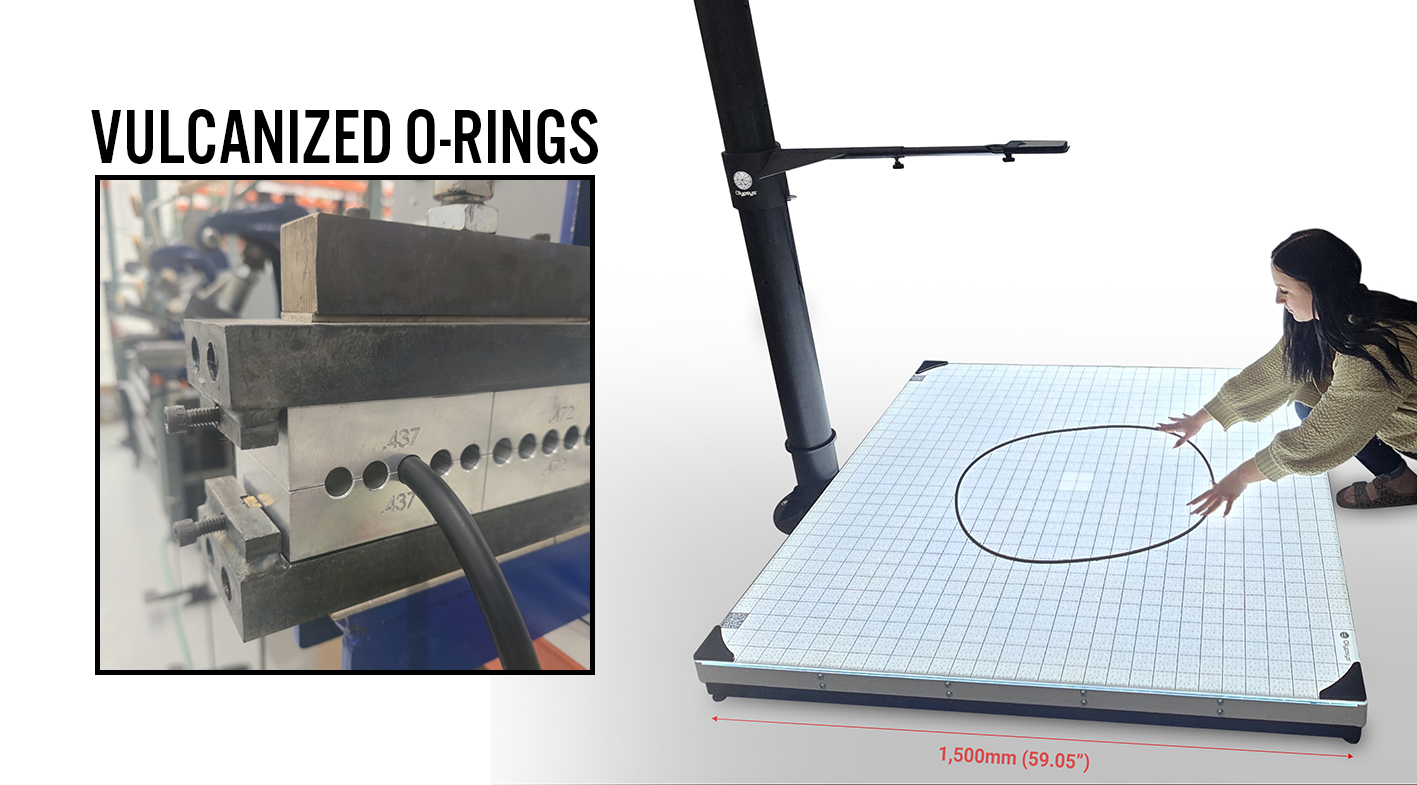
Large black vulcanized O-Ring on an Olypsys Large Format Grid, measured with a phone for ID and cross-section verification

Precision Vulcanized O-Rings: Tolerances, Olypsys® Inspection, and why The O-Ring Store Does it Best

Why The O-Ring Store leads on precision vulcanized O-Rings: posted Class 2 and Class 3 tolerances, in-house splicing capacity, and Olypsys® Large Format inspection that proves large custom rings meet spec.

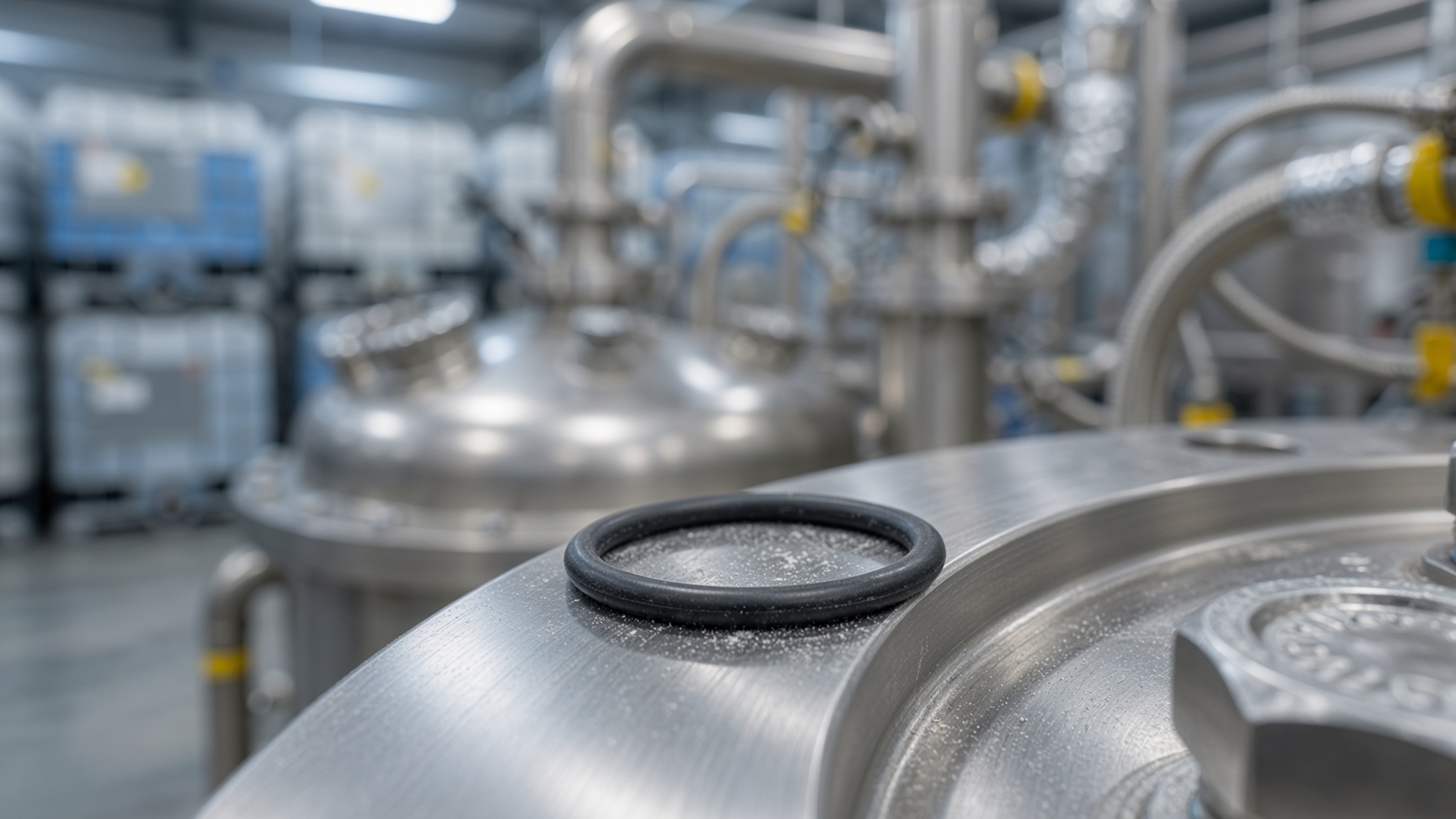
Small black O-Ring seated on a bolted stainless process flange, chemical plant piping and tanks softly blurred behind

Butyric Anhydride O-Ring Compatibility: Which Compounds Hold Up

Butyric anhydride O-Ring guide for cellulose acetate butyrate, fragrance, pharma, and agrochemical service: chart ratings, which elastomers to use, and which to avoid.

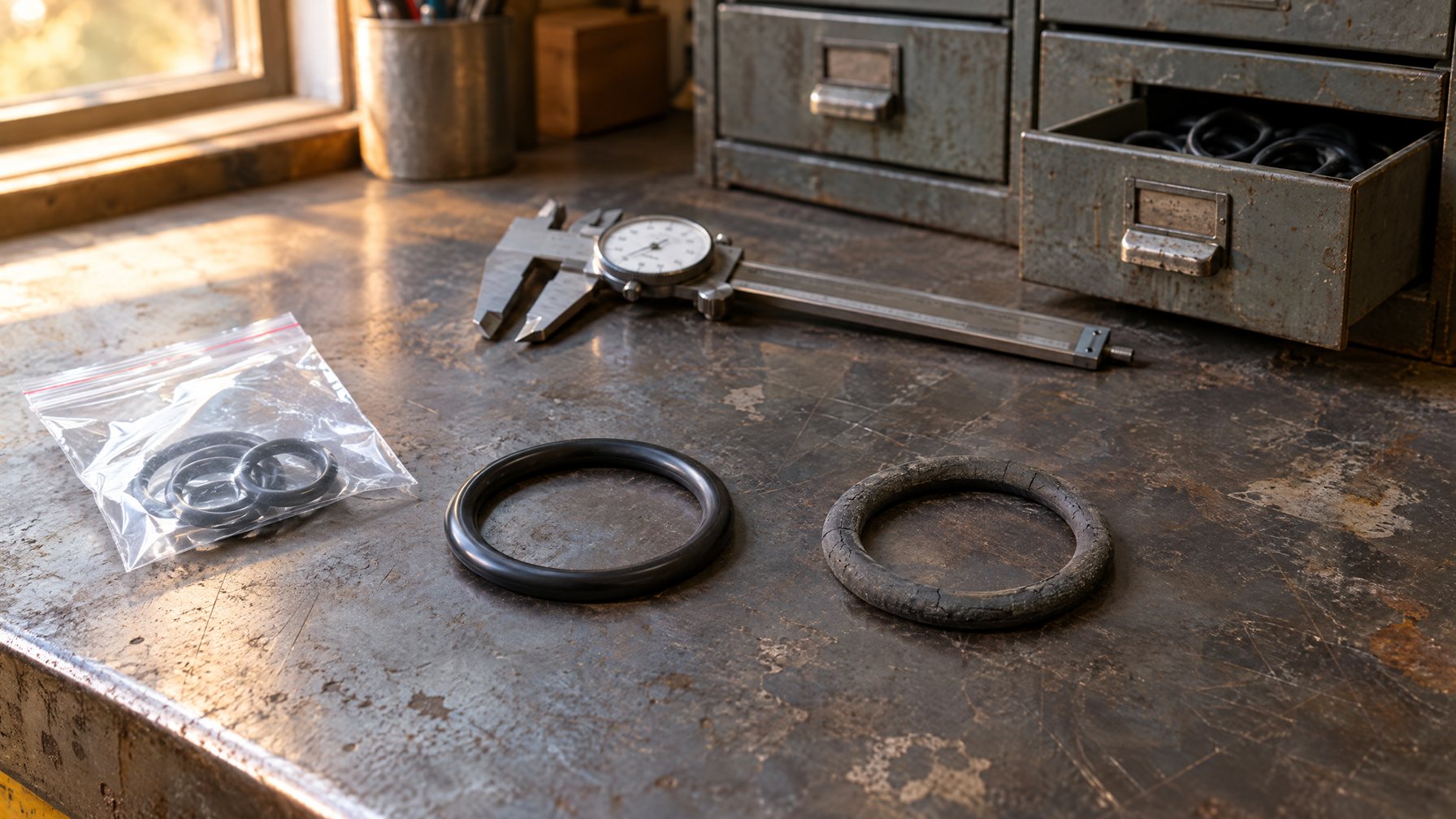
A fresh black O-Ring next to an old cracked one on a worn steel workbench, with a bag of new O-Rings, a dial caliper and an open parts drawer in warm window light

Do O-Rings Expire? Here's the Straight Answer

Most O-Rings outlast the drawer they sit in. Here's how long each compound really keeps, what ruins them on the shelf and how to tell if an old one is still good.

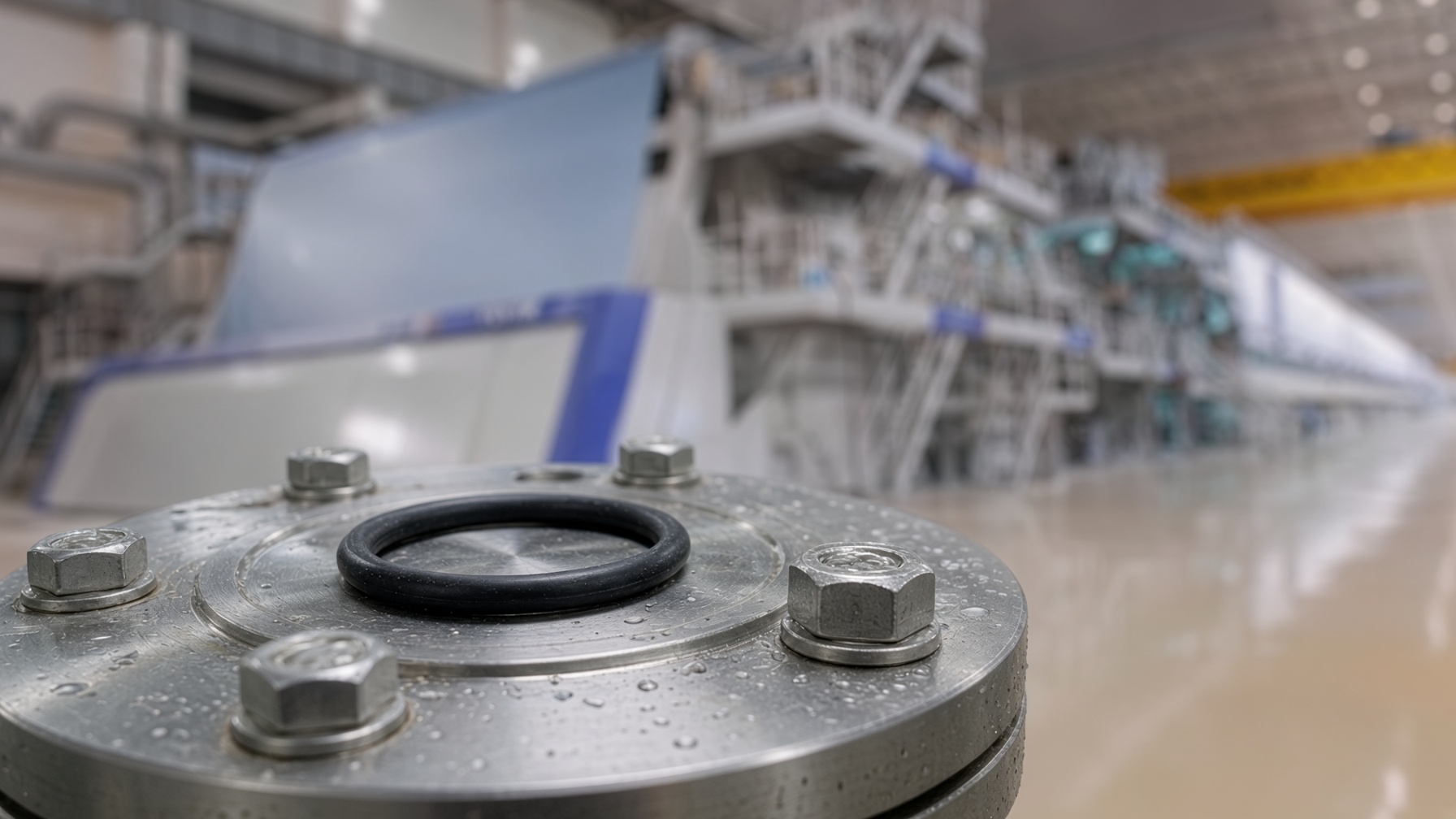
Small black O-Ring seated on a four-bolt chemical dosing pump flange, wastewater treatment sulfide totes and pipe rack softly blurred behind

Calcium Hydrosulfide O-Ring Compatibility: Which Compounds Hold Up

Calcium hydrosulfide O-Ring guide for leather dehairing, wastewater metal precipitation, and pulp service: chart ratings, which elastomers to use, and which to avoid.

Know your compound and size? Order the exact O-Rings you need.

Shop O-Rings